
Daily, Weekly & Monthly Cash Flow Forecasting
Know what’s ahead for your cash. Spend less time updating spreadsheets and more time planning your next move.


See the future of your cash flow






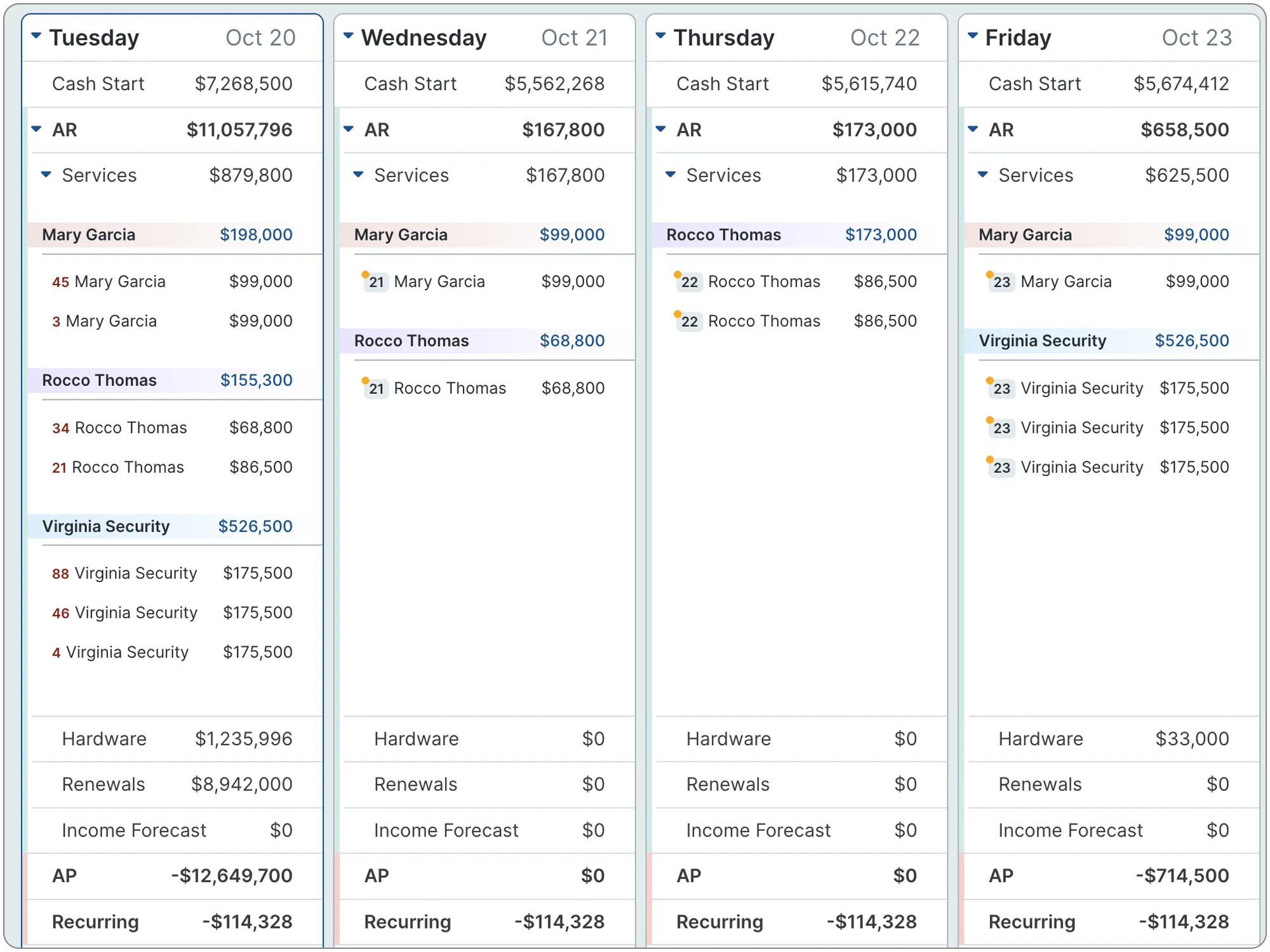
Daily Cash Flow Forecasting
See when cash could run short—before payments are due.
A healthy month-end balance can hide a shortfall next Tuesday. Dryrun helps CFOs and controllers see expected daily balances and the receipts and payments that affect them.
- Use Realistic Payment Dates: Forecast when customers are likely to pay and when supplier payments will leave your accounts. Adjust individual dates as expectations change, so your forecast reflects more than invoice due dates.
- See Where Cash Is Needed: Review expected balances across accounts and entities. Identify where upcoming payments may require a transfer or additional funding, even when the business has enough cash overall.
- Keep the Details Current: Add upcoming expenses, account for delayed collections, and revise expected amounts. Update your cash outlook as circumstances change without reworking spreadsheet formulas each time.
Weekly Cash Flow Projections
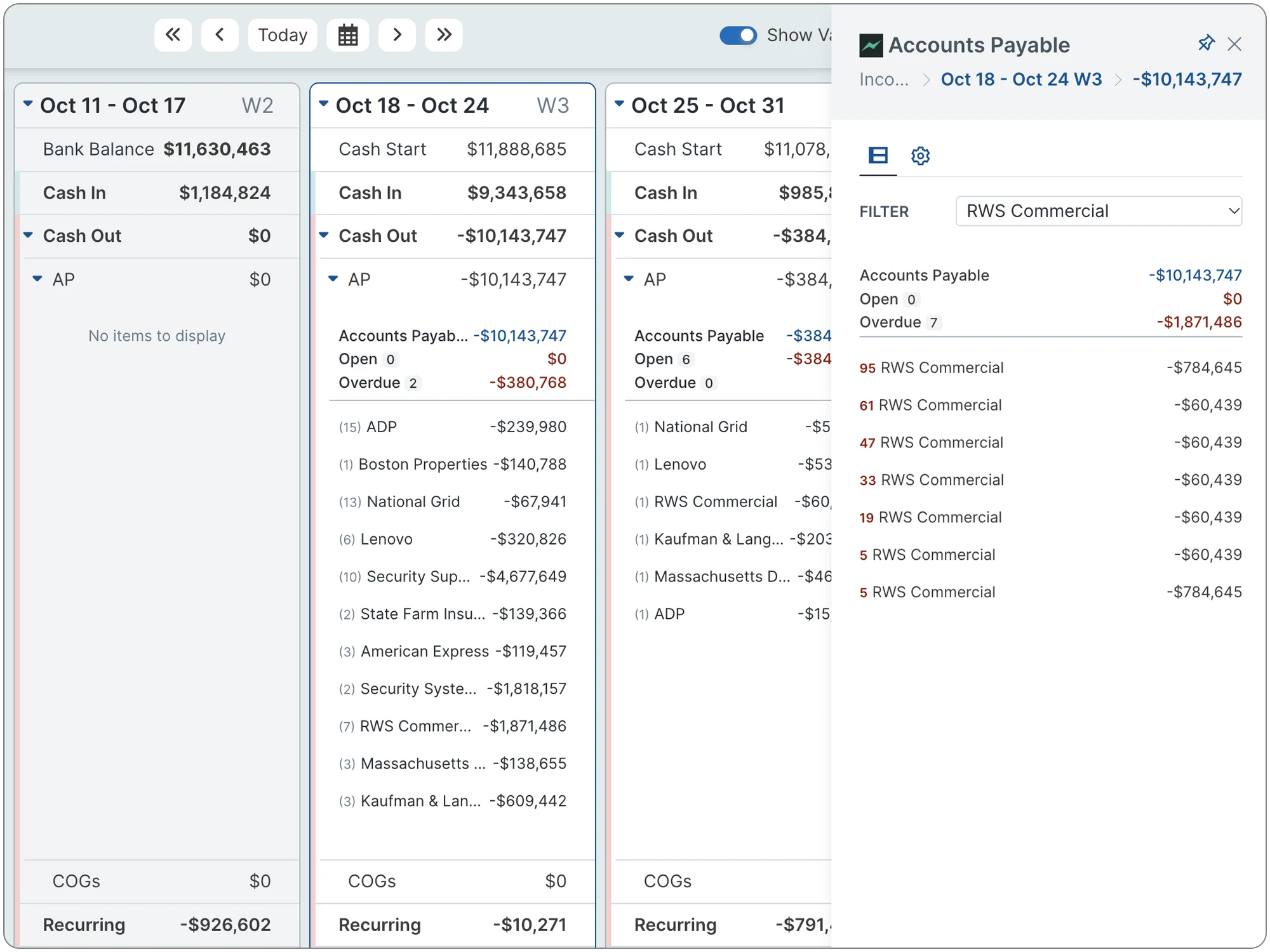
Give yourself time to prepare for the weeks ahead.
A rolling 13-week cash flow forecast helps you plan for payroll, supplier payments, and other commitments. See whether expected collections will cover upcoming costs and where you may need to act.
- Plan Around Upcoming Obligations: View expected cash coming in, cash going out, and the balance remaining each week. Spot pressure points early enough to review spending, follow up on collections, or arrange funding.
- Include What’s Beyond the Books: Bring future projects, planned purchases, debt payments, and other commitments into your forecast. Combine accounting information with the business knowledge needed to understand what is coming.
- Spend Less Time Maintaining Spreadsheets: Reduce repetitive data entry and formula upkeep. Use that time to review changes, investigate potential shortfalls, and give leadership a clear explanation of the weeks ahead.
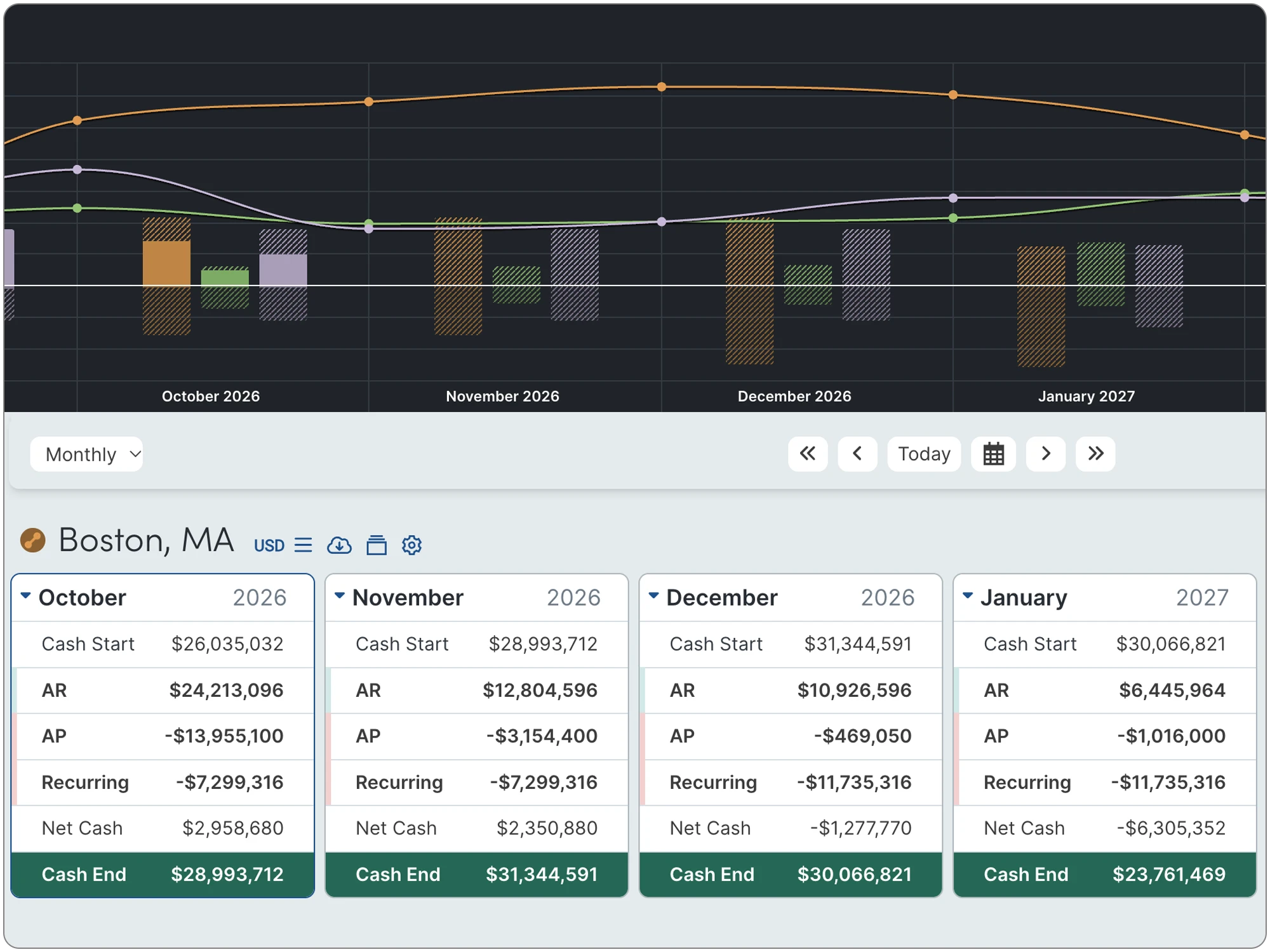
Monthly Strategic Modeling
Understand what your business can afford to do next.
Monthly cash flow forecasts help you look beyond immediate payments and evaluate longer-term plans. See how growth, investment, and changing business conditions could affect the cash available to support your decisions.
- Test Plans Before Committing: Explore the cash impact of hiring, buying equipment, adding inventory, or opening a location. Compare different scenarios to see what each plan could require and when funding might be needed.
- Explain the Outlook to Leadership: Show the CEO, board, or owners how cash is expected to change over time. Connect major movements to the plans and assumptions behind them so the discussion leads to informed decisions.
- Adjust as the Business Changes: Update expected sales, expenses, and payment timing as new information becomes available. Keep your longer-term forecast grounded in current expectations without rebuilding a separate spreadsheet for every alternative.

13-Week Cash flow Forecasting
Financial Forecasting Features
Dryrun
Spreadsheets
Other Tools
Forecast invoice payment dates (AR)

Manual
Few
Model bill payment dates (AP)
Manual
Few
Real-time Forecasting
Some
Live, Rolling Forecast
Some
'What if' Scenarios
Manual
One-Click Scenario Duplication
Multiple Scenarios
Manual
Some
Graph to Compare all Scenarios
Some
Expandable Chart Data
Rare
View All Open Transactions on a Timeline
Manual
Weekly Cash Flow Forecasts
Manual
Multiple Scenarios
Manual
Some
Share Forecasts & Collaborate
Most
Share Individual Scenarios
Manual
Few
Boardroom Ready Visuals
Some
Budget Forecasts and Roll-up
Manual
Few
Infinite Future Forecast
Auto Repeat Forecast Items
Few
Quick Model Account Totals
Few
Daily, Weekly & Monthly Cash Flow Forecasts


